
Microbiology · Research explained
At 63°C, this amoeba can make another amoeba. The record matters because of the kind of cell doing it.
A peer-reviewed study published in Cell on 22 September 2026 described Incendiamoeba cascadensis, a geothermal organism nicknamed the “fire amoeba.” Its ability to reproduce in such heat expands the documented temperature range for eukaryotic life. [1] [2]
The finding invites a better question than simply asking which organism can take the most heat: what exactly must a cell keep working to produce the next generation?

Why 63°C was an important number
Amoebae are eukaryotes: organisms whose cells contain a nucleus. Animals, plants and fungi belong to this broad group too. “Complex” here describes cellular organisation; it does not mean that an amoeba thinks like an animal or has a large body.
The historical ceiling came from research, rather than a universal temperature law. In 1972, Michael Tansey and Thomas Brock reported a systematic search for heat-tolerant fungi. Their samples yielded fungi growing at 55–60°C, but not at 62°C. They proposed that keeping organelle membranes both stable and functional might constrain eukaryotic growth. [3]
A useful way to read that history is to separate the highest temperature demonstrated from the highest temperature conceivable. A measured boundary tells us what has been found under particular conditions. A universal boundary would require a much broader claim about what no organism could ever do. New sampling can challenge the first without making careful earlier experiments meaningless.
The discovery began in a geothermal stream
The team recovered the organism in California’s Lassen Volcanic National Park. Syracuse University’s account describes a modest tributary and difficult fieldwork around unstable, hot terrain. Researchers adapted their sampling equipment to reach the narrow stream safely. The setting matters: distinctive habitats can contain organisms that familiar laboratory collections miss. [2]
Finding a cell in warm water is a starting point. Establishing a growth record requires controlled observations that connect the organism, the temperature and reproduction over time.
What the laboratory tests established
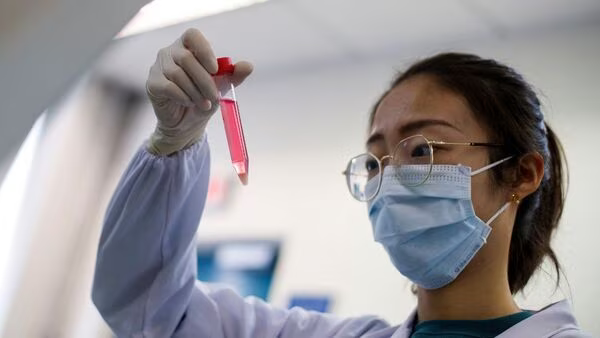
The researchers tested growth at 17 temperatures, with four replicate flasks per temperature. They checked incubation temperatures and tracked culture density. Microscopy also revealed mitosis at 63°C. Growth at that extreme was variable across replicates. [1]
| Temperature | Observation |
|---|---|
| 55–57°C | Best growth range |
| 63°C | Cell division observed |
| 64°C | Movement, without observed growth |
Survival, movement and reproduction are different claims
When reading an extreme-life headline, three questions help:
- Did the cells survive? Recovery after exposure asks whether activity can resume when conditions improve.
- Could they move? Movement demonstrates a functioning process, but does not by itself establish that the population is multiplying.
- Did they reproduce? Growth measurements ask whether cells produce a growing population over the observation period.
Those questions are not interchangeable. A cell might remain recoverable after a short exposure while being unable to sustain growth there. That is why the word “divides” carries more scientific information than a broad claim that an organism “survives extreme heat.”
How might the cell cope with heat?
Genome comparisons and RNA sequencing pointed to protein quality control, DNA repair and membrane trafficking. Predicted protein-surface features also suggested possible stability strategies. These are candidate explanations for heat adaptation, rather than a complete causal account. [1]
Think of the distinction as identifying a busy maintenance team versus proving which repair keeps a building standing. A pathway becoming more active can guide experiments. A stronger causal test would change a candidate component and measure whether the ability to grow in heat changes. Computational predictions likewise need experimental follow-up before a proposed molecular explanation becomes an established mechanism.
Why this is not the hottest temperature for all life
Other cellular lineages set very different benchmarks. In a 2008 PNAS study, Ken Takai and colleagues reported proliferation of the archaeon Methanopyrus kandleri strain 116 at 122°C under elevated hydrostatic pressure. Increasing pressure from 0.4 MPa to 20 MPa extended the reported upper growth temperature from 116°C to 122°C. [4]
That example also shows why a record needs its experimental conditions attached. A temperature result obtained under high pressure should not be retold as an organism casually reproducing in an open vessel at the same temperature. Pressure, the organism and the growth conditions belong to the result. Comparing headline numbers alone can erase the biology that makes each finding interesting.
What could this mean for biotechnology?
There is a strong historical reason to study unusual microbes. In 1988, Randall Saiki and colleagues showed how a heat-stable DNA polymerase from Thermus aquaticus could improve PCR, the laboratory method used to amplify DNA. Their experiments reported gains in specificity, yield, sensitivity and the length of DNA products that could be amplified. [5]
That example is a precedent for the value of heat-adapted biology, not evidence that this amoeba already supplies a comparable technology. A future application would need its own chain of evidence: identify a useful component, show how it works, test it outside the original organism, and compare performance with existing tools.
For the fire amoeba, possible directions include studying heat-tolerant cellular components and the coordination of stress responses. Those are research opportunities, not ready-made enzymes, treatments or industrial processes. An interesting organism provides questions and starting material; it does not automatically provide a product.
The next questions are as interesting as the record
Useful follow-up questions include which proposed mechanisms are necessary, how consistently different isolates behave, and whether changing growth conditions shifts the measured limit. Another challenge is separating adaptations that help individual molecules from those that depend on an entire cell working together.
The lasting lesson is about discovery. A documented limit can reflect both biology and the places, organisms and conditions researchers have examined. The fire amoeba gives scientists a new way to test that boundary—and readers a reason to ask precisely what every new record measures.
Sources and further reading
- Rappaport, H. B., et al. A geothermal amoeba sets a new upper temperature limit for eukaryotes. Cell (2026). doi:10.1016/j.cell.2026.08.043 . Primary peer-reviewed study.
- Bernardi, D. Biologists Discover ‘Fire Amoeba’ that Pushes the Limits of Complex Life. Syracuse University Today, 1 October 2026. Read the university’s account . Institutional background and fieldwork context.
- Tansey, M. R., & Brock, T. D. The Upper Temperature Limit for Eukaryotic Organisms. PNAS 69(9), 2426–2428 (1972). doi:10.1073/pnas.69.9.2426 . Historical primary study.
- Takai, K., et al. Cell proliferation at 122°C and isotopically heavy CH4 production by a hyperthermophilic methanogen under high-pressure cultivation. PNAS 105(31), 10949–10954 (2008). doi:10.1073/pnas.0712334105 . Primary high-pressure cultivation study.
- Saiki, R. K., et al. Primer-directed enzymatic amplification of DNA with a thermostable DNA polymerase. Science 239(4839), 487–491 (1988). doi:10.1126/science.2448875 . Primary biotechnology study.





0 Comments